Blog Playbooks · What You Missed: Nov 16 to 22, 2026 · Part 10
The FBI says hacked search results led to $28 million in ransom payments
An FBI alert says criminals took over more than 1,000 WordPress sites and used search results to trap visitors. If your site runs on WordPress, here is the plain checklist to hand your web person this week.

"It is not often the FBI writes the letters SEO into a cyber alert," Barry Schwartz of Search Engine Roundtable wrote this week. The alert describes criminals who took over ordinary WordPress websites and used them to show up in Google next to legitimate pages, so that people searching for help would click, download a file and let ransomware in the door.
This post is not security advice or legal advice. We are a marketing agency. If you think your site has been compromised, talk to your web person or a security professional today, and read the FBI's own alert.
What happened
On November 16, 2026, the FBI released a FLASH alert (number CC-111626-MW) titled "Gootloader Malware Using SEO Poisoning and Compromised Websites to Gain Initial Access." It is marked TLP: CLEAR, which means it is meant to be shared publicly. Search Engine Roundtable picked it up on November 17.
The FBI describes Gootloader as "an initial access framework that uses a JavaScript malware loader, compromised websites, and search engine optimization (SEO) techniques to infect organizations." In plain words: a criminal breaks into websites, uses them to rank in search for specific phrases, and serves a booby-trapped file to whoever clicks.
The numbers, from the alert: as of October 2026, the FBI identified over 1,000 infected WordPress sites and 216 domains controlled by the Gootloader administrator, "which led to over $28 million in ransomware payments."
The FBI says the administrator scanned WordPress sites for XML-RPC, a standard WordPress connection point that the alert says attackers often target to guess passwords, and "later used compromised credentials to breach systems." It also says stolen credentials were used "to access vulnerable plugins and themes." Once inside, the hacked sites served as lure pages and redirectors, and hidden keyword links were added to push the lures higher in search.
The search phrases were narrow on purpose. The FBI says they were "low-ranking competition" phrases, such as a jurisdiction-specific contract clause, and that the recent focus was legal professionals. The alert does not say whose websites were hijacked or what size those businesses were.
Source: FBI FLASH CC-111626-MW, November 16, 2026
What it means for your business
You might think, "Nobody targets a salon website." In this scheme, nobody does. The criminal borrows your site, your domain and the trust Google has built up in it to reach someone else.
That costs you in ways that show up later. Pages you never wrote can appear in Google under your name. Visitors who land on them can be sent somewhere dangerous. Your web person ends up cleaning files instead of building pages. And the customer who searched for you and saw something strange may not come back.
The FBI's own fix list for WordPress reads like basic housekeeping, which is good news. Most of it is about keeping things current, removing what you do not use and locking the front door.
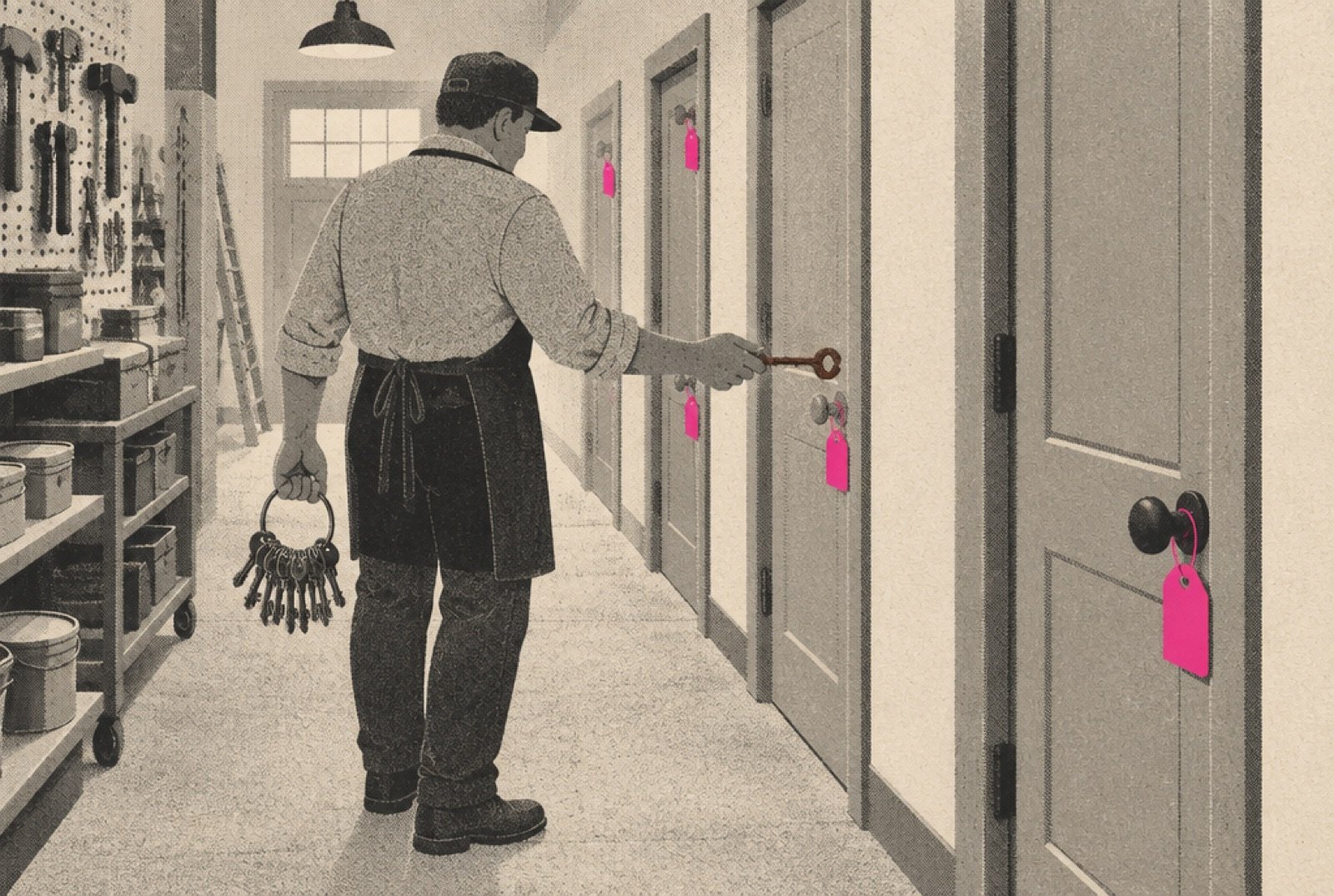
In this scheme, a criminal borrows your website to reach a stranger, and you are left with the cleanup.
A forgotten WordPress site
Plugins and themes nobody has updated in a year. A plugin installed for a promotion two years ago, still switched on. Admin logins for a former employee and an old agency. Passwords only, no second step.
A site someone looks after
WordPress, theme and plugins updated on a schedule. Anything unused deleted, not just turned off. A short list of who has admin access, reviewed. Two-factor sign-in for every admin and the hosting account.
What to do this week
Hand this list to whoever looks after your website. If that is you, do it with someone who knows WordPress. The FBI's alert includes a WordPress protection table; these steps follow it in plain language.
- Update WordPress, your theme and your plugins
The FBI recommends updating WordPress core and trusted plugins or themes automatically where feasible. Ask your web person when they last did it.
- Delete what you do not use
The FBI says to remove unused plugins, themes, accounts and staging sites. Switched off is not the same as gone.
- List every admin login and remove old ones
Former staff, past agencies, a freelancer from three years ago. If they do not need access today, remove it.
- Turn on two-factor sign-in
The FBI recommends strong multifactor sign-in for administrators and hosting access. That covers your WordPress admins and your hosting account.
- Look at your search data for strange pages
The FBI suggests reviewing Search Console for unrelated legal or business searches, sudden new indexed pages and security warnings. A bakery ranking for contract law is a red flag.
- If something looks wrong, get help
Report suspected Gootloader intrusions to a local FBI field office or at ic3.gov, as the FBI requests. Your web person or a security professional should handle the cleanup.
If you want a wider look at how the AI tools and search engines see your site once it is clean, we wrote about that here: ask the AI about your business first.
This is part of What You Missed, our weekly read on the marketing news that matters to business owners. See the full week: /blog/what-you-missed-week-of-november-16-2026
Sources
- FBI, FLASH CC-111626-MW, "Gootloader Malware Using SEO Poisoning and Compromised Websites to Gain Initial Access," November 16, 2026. ic3.gov
- Search Engine Roundtable, "FBI: SEO Poisoning Led To $28 Million In Ransomware Payments," Barry Schwartz, November 17, 2026. seroundtable.com