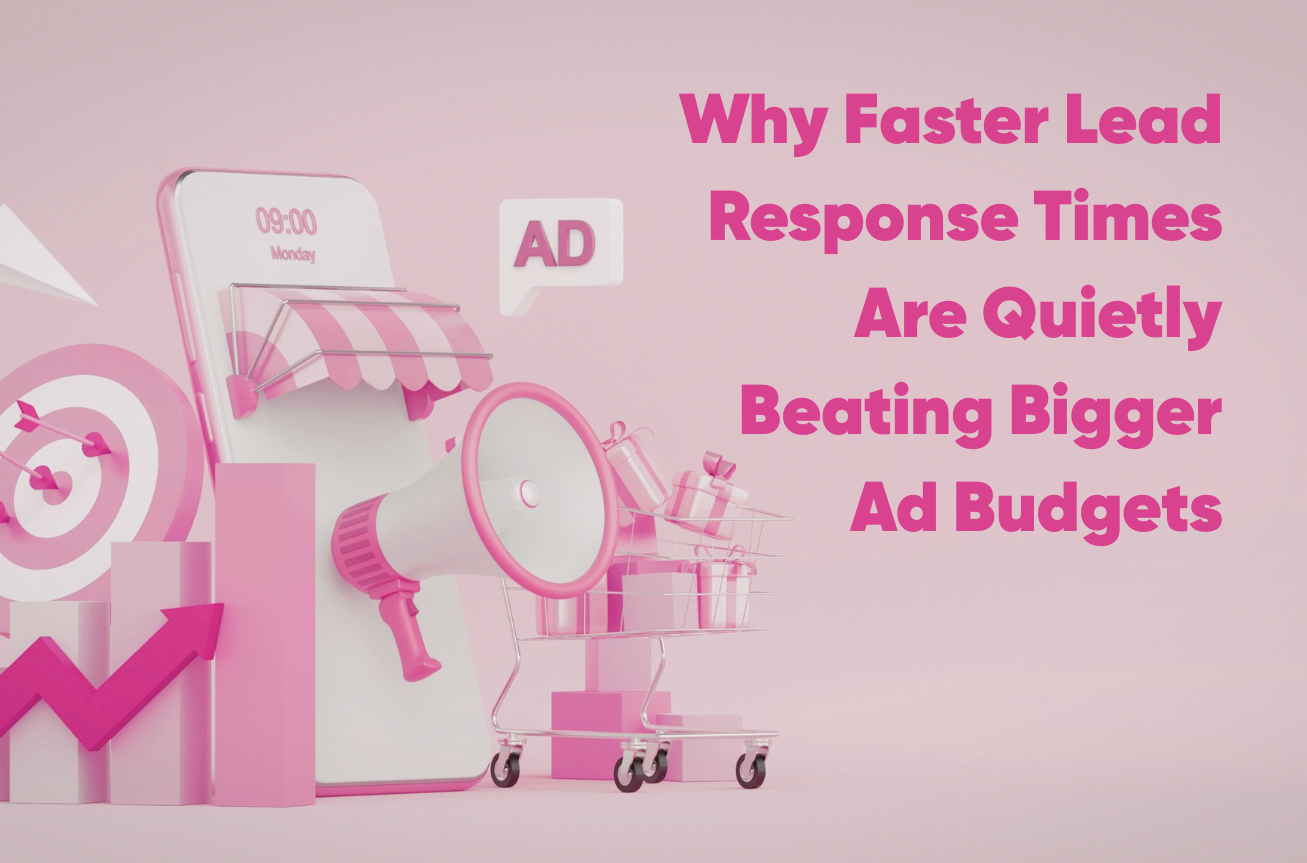
Why Faster Lead Response Times Are Quietly Beating Bigger Ad Budgets
Most businesses believe growth comes from increasing ad spend. Bigger budgets feel like progress. More leads feel like momentum. What rarely gets discussed is how many of those leads die before anyone ever speaks to them.
Most businesses believe growth comes from increasing ad spend. Bigger budgets feel like progress. More leads feel like momentum. What rarely gets discussed is how many of those leads die before anyone ever speaks to them. Speed to lead has become one of the most overlooked competitive advantages in digital marketing, and the gap between fast and slow responders is widening every year.
⏱️ The Intent Window Is Measured in Minutes
When someone fills out a form or calls after seeing an ad, there is a narrow window where intent is at its peak. That window is measured in minutes, not hours. Yet many companies treat inbound leads, such as emails and IAS opportunities, as opportunities. They sit in inboxes. They wait for callbacks. They are routed through systems designed for convenience rather than urgency. By the time someone reaches out, the moment has passed, and the lead has cooled or moved on.
📊 Speed to Lead Impacts Media Performance
This is not just a sales problem. It is a media buying problem. Ad platforms learn from outcomes, not intentions. When leads are contacted quickly and conversations happen, the system sees strong signals. When leads go untouched, the system understands that the traffic it sent did not drive meaningful action. Over time, that feedback affects cost, quality, and scale. Two businesses can run the same ads with the same budget and see completely different results based solely on how fast they respond.
🚀 Discipline Beats Bigger Budgets
What makes this quiet advantage so powerful is that it does not require more spending. It requires discipline. Businesses that respond within five minutes consistently outperform competitors who respond in thirty. Not because their ads are better, but because they capitalize on intent while it is still alive. Faster response turns average leads into booked appointments. Slower response turns good traffic into wasted spend.
🔄 The Compounding Effect of Speed
This is where many teams get it backwards. When performance dips, they ask for more leads. More budget. More creative. More campaigns. Rarely do they ask how fast the first call is made or whether anyone is accountable for that moment. Speed to lead is not flashy, but it compounds. Faster response improves conversion rates. Higher conversion rates improve algorithmic learning. Better learning lowers costs. Lower costs allow more intelligent scaling. Bigger budgets without speed just amplify inefficiency.
🏆 The Quiet Competitive Advantage
The businesses winning right now understand that attention is rented, but intent is perishable. They handle inbound leads and live conversations, not tasks to handle later. They build systems that prioritize immediacy, not convenience. In a landscape where ad costs continue to rise, the companies that respond first are quietly taking market share without spending more.