Brand Erosion is Quietly Killing Your Business, and You Don’t Even See It Yet
When you start your business, your brand is you. Every blog post, every client call, every idea comes straight from your gut. You build your reputation one authentic insight at a time. People trust you because you aren’t recycling everyone else’s thoughts. You’re not trying to sound smart.
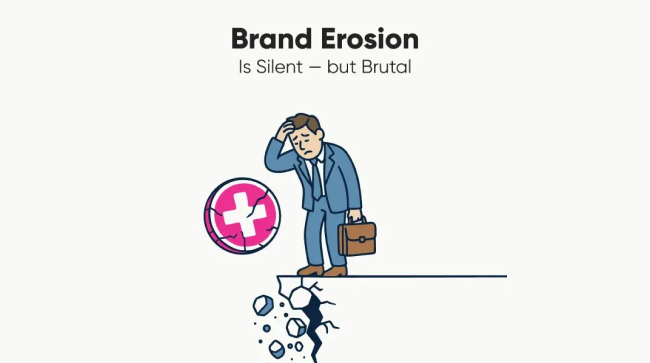
When you start your business, your brand is you. Every blog post, every client call, every idea comes straight from your gut. You build your reputation one authentic insight at a time. People trust you because you aren’t recycling everyone else’s thoughts. You’re not trying to sound smart. You are an entrepreneur and have a unique way of looking at things. You see trends, connect dots, and share ideas that others miss.
But then growth happens.🌱⚙️
You hire someone else to write your blog posts because you need to focus on bigger things. You could hire someone overseas. You start letting AI write your articles because someone told you it saves money and scales your content.
Soon, your posts become generic and meaningless. You don’t recognize your voice anymore. Everything feels flat and lifeless.
Your content becomes the kind of fluff nobody reads.
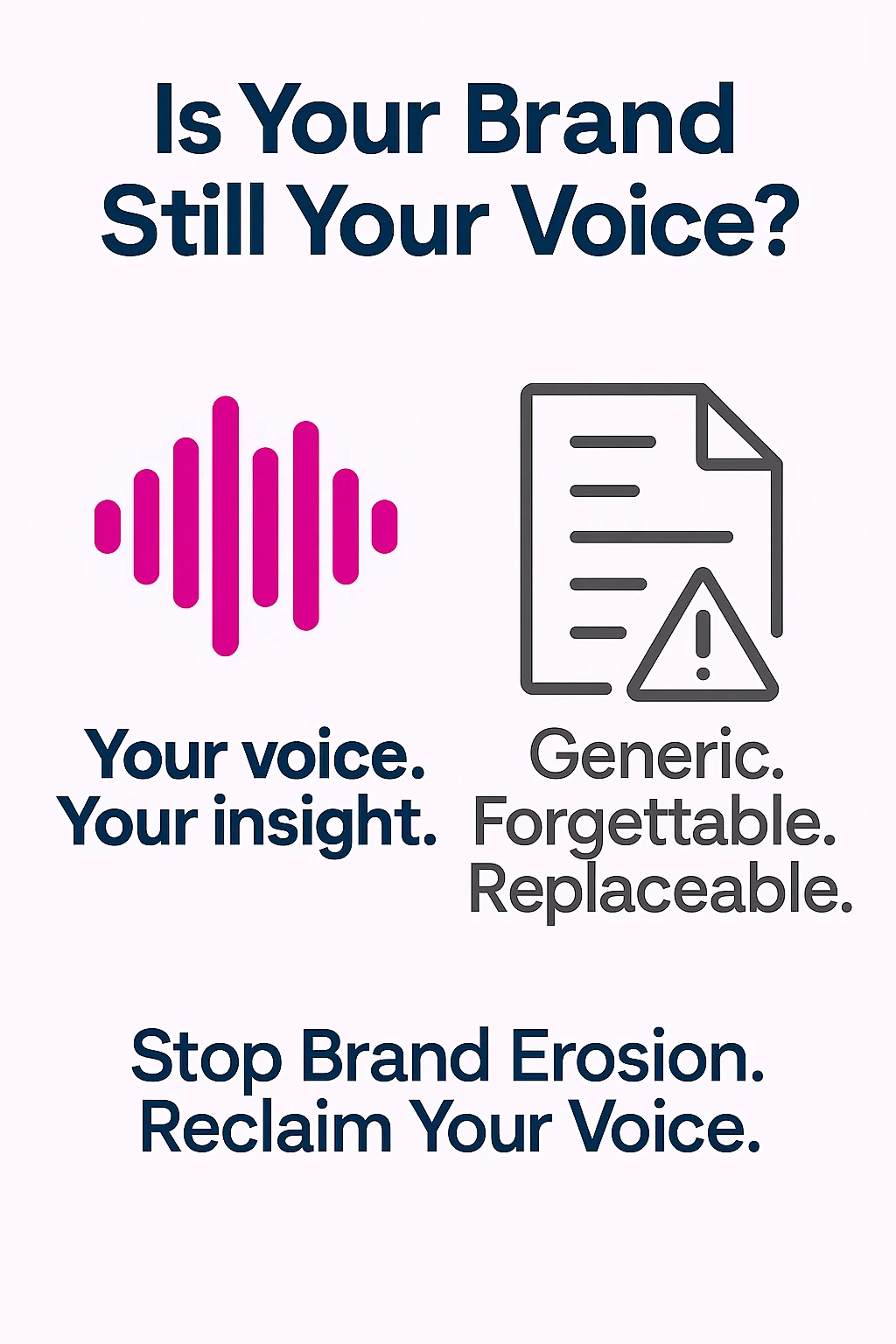
At first, you might not even notice. Your web traffic looks steady. You’re still closing deals. Nothing immediately screams “crisis.” But slowly, silently, your brand’s credibility starts to erode.
Here’s the brutal truth about brand erosion. It doesn’t always show up immediately in your numbers. It doesn’t hit your bottom line the next month. But it’s lurking there, invisible until suddenly it costs you something big.
It shows up clearly when the market shifts or your industry changes direction. A major opportunity arises. Maybe it’s a key partnership, a franchisee deciding whether to bet on you or someone else, or a potential client facing a new challenge. They research you, read your latest content, and realize you’re not talking about what matters anymore.
They choose someone else not because the other firm is more capable but because the other firm clearly positions itself as an expert. Your diluted content has made you look generic and outdated rather than like the forward-thinking leader you once were.
Imagine this scenario. A restaurant franchise you’ve been chasing is looking for an agency to lead its national ad strategy. They’re expanding rapidly and need fresh ideas to win in tough new markets. You built your business on exactly these insights, but when they visit your website, your recent content doesn’t say that; it says you work with emerging brands.
Instead of the razor-sharp expertise you built your name on, your latest blog posts read like a list of recycled marketing clichés. Your competitors firms half your size with a fraction of your experience are putting out provocative, fresh ideas. They’re taking risks, showing exactly how they see the future of restaurant marketing. They get the deal, not because they’re better, but because their voice was clear. Your voice got lost.
That’s the hidden cost of brand erosion. That’s the damage AI-written fluff does when you outsource your voice to save pennies. It costs you leadership, credibility, and big opportunities you never even knew existed.
Here’s what to do right now:
🔎 🧠Audit your content immediately. Look critically at your recent posts. Is your real voice there? If not, stop publishing until you fix it.
✍️ 🎯Take back control of your ideas. Even if someone else does the writing, make sure every insight comes directly from you or your internal experts.
🚀 📈Stay ahead of industry shifts. Write proactively about emerging trends. Position yourself as the voice leading the charge, not reacting after it’s too late.
Brand erosion is silent, sneaky, and devastating. But it’s also entirely within your control to stop. Right now, you still have a choice. You can keep outsourcing your voice, or you can reclaim it and remind your industry exactly who you are and why they trusted you in the first place.
The easy thing is to keep letting AI-generated content fill your blog. The profitable thing is to make sure every piece of your messaging reminds your customers—and your competitors—exactly why you’re the expert worth listening to.