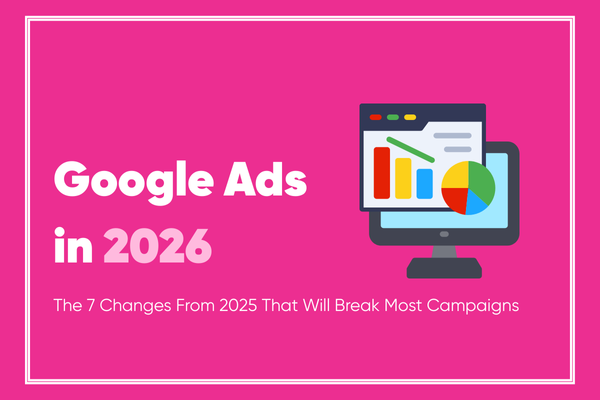
Google Ads in 2026: The 7 Changes From 2025 That Will Break Most Campaigns
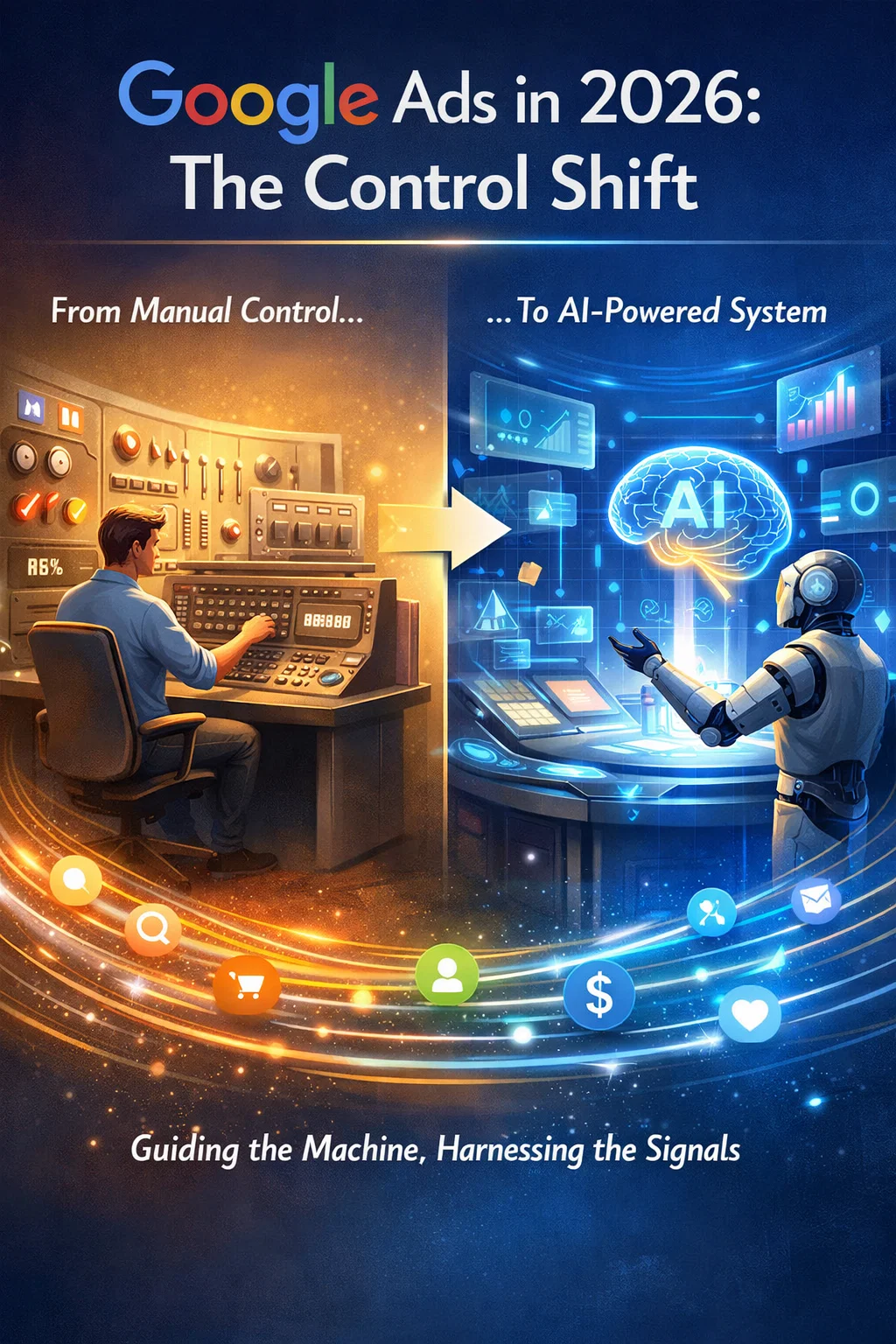
Google Ads is a different animal going into 2026. The trend has been clear: more automation, more AI decision-making, fewer levers for marketers—and if you’re still running Google like it’s 2019, your campaigns will struggle.
Google Ads is a different animal going into 2026.
The trend has been clear: more automation, more AI decision-making, fewer levers for marketers—and if you’re still running Google like it’s 2019, your campaigns will struggle.
Here are the 7 shifts we’re watching that will break most accounts (and how we’re adapting at Sneeze It). 👀📊
1) Performance Max is no longer optional ⚙️
Whether you like it or not, Google is pushing businesses deeper into Performance Max.
If you ignore it completely, you’ll often end up:
- missing inventory
- paying more in Search
- losing auction efficiency
**Fix:**Run PMax intentionally with guardrails:
- Clear asset groups
- audience signals (not as targeting, as training)
- high-performing creative
- feed optimization for e-commerce
- rigorous search term monitoring on brand protection
2) Search is becoming “Search + AI.” 🔍🤖
Search campaigns are increasingly influenced by AI-driven matching and intent signals that are less transparent.
Exact match isn’t exact.
Phrase match isn’t phrase.
**Fix:**Stop treating keywords like precision instruments.
Treat them like inputs into a smart system—and focus on:
- intent clusters
- conversion quality
- negative keyword hygiene
- landing page alignment
3) The brands with weak conversion tracking will get crushed ⚠️
Google’s automation needs clean signals.
If your tracking is sloppy, you will train the algorithm poorly.
**Fix:**Make conversion tracking a priority, not an afterthought:
- Use primary conversions only for what matters
- Remove junk conversions
- Ensure call tracking is accurate
- Connect offline conversion tracking when possible
4) First-party data isn’t “nice to have” anymore 🧩
Google is relying more heavily on first-party signals.
Brands that can’t feed the system will pay more to acquire.
**Fix:**Build a first-party pipeline:
- email capture
- SMS capture
- CRM syncing
- customer list uploads
- Remarketing lists that actually have volume
5) Creative matters more in Google than most people think 🎨📊
The old “Google is just keywords” mindset is dead.
Your assets inside RSAs and PMax influence performance more than most marketers admit.
**Fix:**Treat Google creative like it’s Meta creative:
- Test messaging angles
- emphasize proof
- Rotate new assets regularly
- Include actual offers, not “learn more.”
6) Your landing page will determine your CPC 🧭
Yes—your landing page affects your cost per click through Quality Score and conversion quality.
If your page is slow, vague, or untrustworthy, you’ll pay more.
**Fix:**Speed + clarity + trust:
strong headline
obvious offer
credibility above the fold
friction reduction
fast load time
7) Reporting is getting harder 📉
Google reporting is evolving, but transparency is still a challenge.
If you can’t explain where your conversions come from, your strategy will deteriorate.
**Fix:**Use blended measurement:
- platform reporting
- CRM attribution
- call tracking
- pipeline reporting
- cost-per-qualified-lead tracking
Final Thought 🎯
Google Ads in 2026 is an automation battle.
The winners aren’t the brands with the fanciest dashboards.
They’re the ones feeding the system clean data, strong creative, and real offers.