Blog Playbooks · Borrowed From Apps · Part 8
When to stop emailing someone, and change the channel instead
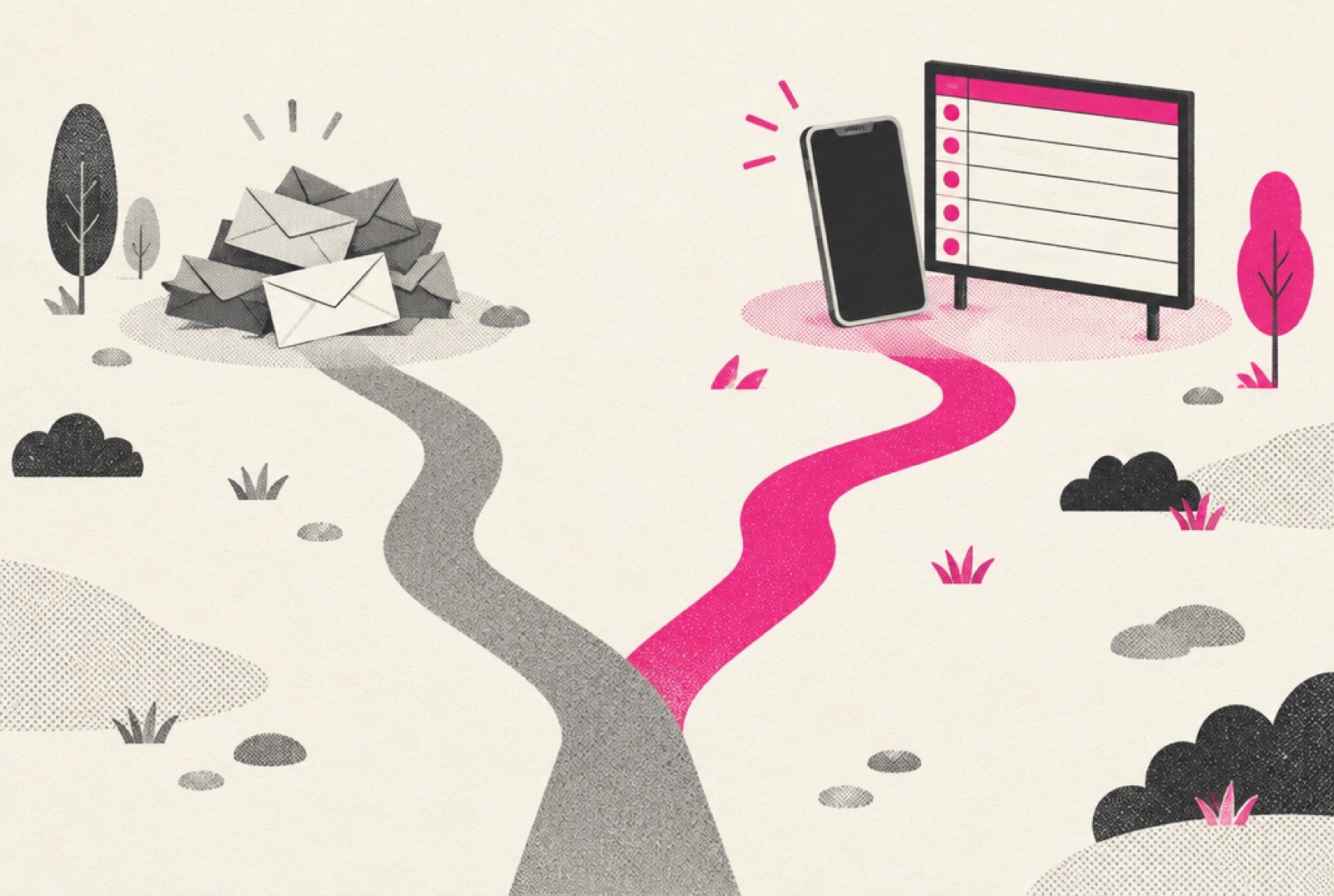
Free games know that a player who never buys is still worth something, on a different route. A lead or member who stops opening your emails is the same: pause the inbox, move to a channel they agreed to, and come back with something new.

Every membership business has a list of people who have gone quiet in the inbox. Leads who asked about a trial in the spring. Members who used to open the schedule email and now do not. The usual answer is to keep sending, on the theory that the next one might land.
Free games work from a different assumption. Most players of a free-to-play game will never buy anything, and the games are built knowing that. Many earn from two sources, purchases and ads, and treat them as separate routes. A player who ignores the shop is still a player. Naavik's teardown of Royal Kingdom, for example, credits part of the game's higher revenue per daily user in its UK soft launch to better ad targeting, alongside its level design. That is game data, an analog, but the idea carries: when one route goes quiet, the person is usually still there, reachable another way.
This is post 8 of Borrowed From Apps. In post 7 we looked at the regulars who keep showing up. This post is about the people who stopped answering.
Why sending more makes it worse
Litmus, the email testing company, asked 1,000 U.S. consumers in April 2025 why they unsubscribe from a retailer's emails. The top answer was frequency.
Source: Litmus (from Validity), June 2025. 1,000 U.S. consumers 18+, surveyed by Dynata, April 2025.
Two out of three said the emails came too often. Close to half said the content did not fit them. Those are retail shoppers, not gym members, but the gym data points the same way. Zenoti's 2026 survey of current and lapsed U.S. gym members found that only 14% of lapsed members found their gym's outreach very relevant, and nearly half said their gym never proactively reached out at all.
Put those together, and you get two failures that look like opposites. Some people get nothing. Others get the same promo every week until they unsubscribe, and once they do, that door is closed for good.
Silence in the inbox is a reason to pause the inbox, before the person unsubscribes.
The rule: a set number, then a pause
The game logic is to stop pushing one route at a person who has shown it is not working. A membership business can do the same with email. Pick a number of unanswered messages, write it down, and stop there.
- 1EmailA set number of messages, each with something useful
- 2No replyNo open, click or answer after the last one
- 3PauseEmail stops for a set time; the person stays on the list
- 4Another channelOnly one they agreed to, with a different message
- 5Come backEmail resumes later with something new
Here is how that might look for a hypothetical studio. A lead asks about a trial and gets three emails over two weeks: the class schedule, a note from a coach, an invitation to a first class. No opens. Instead of a fourth email, the system pauses email for 30 days. If the lead gave permission for texts, one short text goes out with a different message, such as a question about what time of day suits them. Thirty days later email starts again, with something that was not in the first three: a new class, a workshop, a season.
The numbers in that example are ours, not a benchmark. Your right count depends on your list, but write one down.
What most businesses do
Every contact gets every campaign. Silence is read as "send again." The only way off is to unsubscribe.
What the best apps do
Each person's state decides what they see. A route that stops working gets paused. The next contact is different from the last one.
Change the channel only where you have permission
Changing the channel is where this goes right or badly wrong. Texting or targeting someone on a channel they never agreed to is a new problem of its own. This is not legal advice, and the rules differ by country and by channel, but here are the basics we work from.
Text messages need consent, and opt-outs have to be honored in every form. New FCC rules taking effect on November 25, 2026, list seven words a person can reply with to opt out, and a sender has to honor all of them. We covered that in QUIT is a legal opt-out in a text. Someone who opted out of texts is not a candidate for "change the channel."
Ads to your own customer list need permission and a lawful basis too. Uploading emails to Meta or Google, so that a quiet contact sees your ads is a channel change too, and both platforms set conditions on it:
- Meta's Custom Audiences terms, effective December 3, 2025, have the advertiser promise it has all necessary rights and permissions and a lawful basis to use the list, and say the list must not include people who have opted out.
- Google's Customer Match policy says to upload only data you collected first-party, on your site, in your app or in your location, from customers who shared it with you. You have to disclose that sharing in your privacy policy and get consent for it where the law requires; in the EEA, the UK and Switzerland, you need all legally required consent.
A person who unsubscribed from your email has told you something. Keep them off the upload.
A phone call is also a channel. For a member who has gone quiet in email, a short call from a coach who knows them is often the most welcome change of all. The same opt-out respect applies.
Lists never go quiet, and they never get spammed
The pause is temporary. A contact who did not answer in March may be ready in September. Zenoti's 2026 survey found 51% of lapsed gym members say the right offer at the right time would bring them back, and four in five say something would. That argues for coming back later with something new.
So the system has two rules, and they work together:
- Nobody on the list goes months without hearing anything worth reading.
- Nobody gets the same ask again and again after they have stopped answering.
On our side, Sneeze It Flow can already branch a lead flow on the answers someone gives, so a lead who says "evenings" gets evening classes. Remembering returning visitors and routing by ad source are things we are building, not features we have live today. Neither is needed to start. A tag in your email tool for "paused until" and a calendar reminder will do.
Next and last in the series: the lines we will not cross when we use what we know about each person.
Sources
- Litmus (from Validity), "Why Your Best Marketing Channel Is Driving Customers Away", June 12, 2025. 1,000 U.S. consumers 18+, Dynata, April 2025. litmus.com
- Naavik (Harshal Karvande), "Can Royal Kingdom Match Royal Match?", Naavik Digest, November 20, 2024. naavik.co
- Zenoti, The Check-In, "2026 gym member survey: what today's fitness consumers really want", July 17, 2026. zenoti.com
- Zenoti, The Check-In, "Silent churn crisis: 2026 gym membership data", July 31, 2026. zenoti.com
- Zenoti, "The 2026 Fitness Consumer Survey Results", 1,393 current and lapsed U.S. gym members, May 2026. zenoti.com
- Meta, "Custom Audiences Terms", effective December 3, 2025. facebook.com
- Google Ads Help, "Customer Match policy". support.google.com