Blog Playbooks · Borrowed From Apps · Part 6
The first 30 days of a membership are the tutorial
Good games and apps design a new player's first sessions on purpose. Most memberships leave the first month to chance. Here is how to plan it: three classes, a coach who knows their name, and a first milestone.
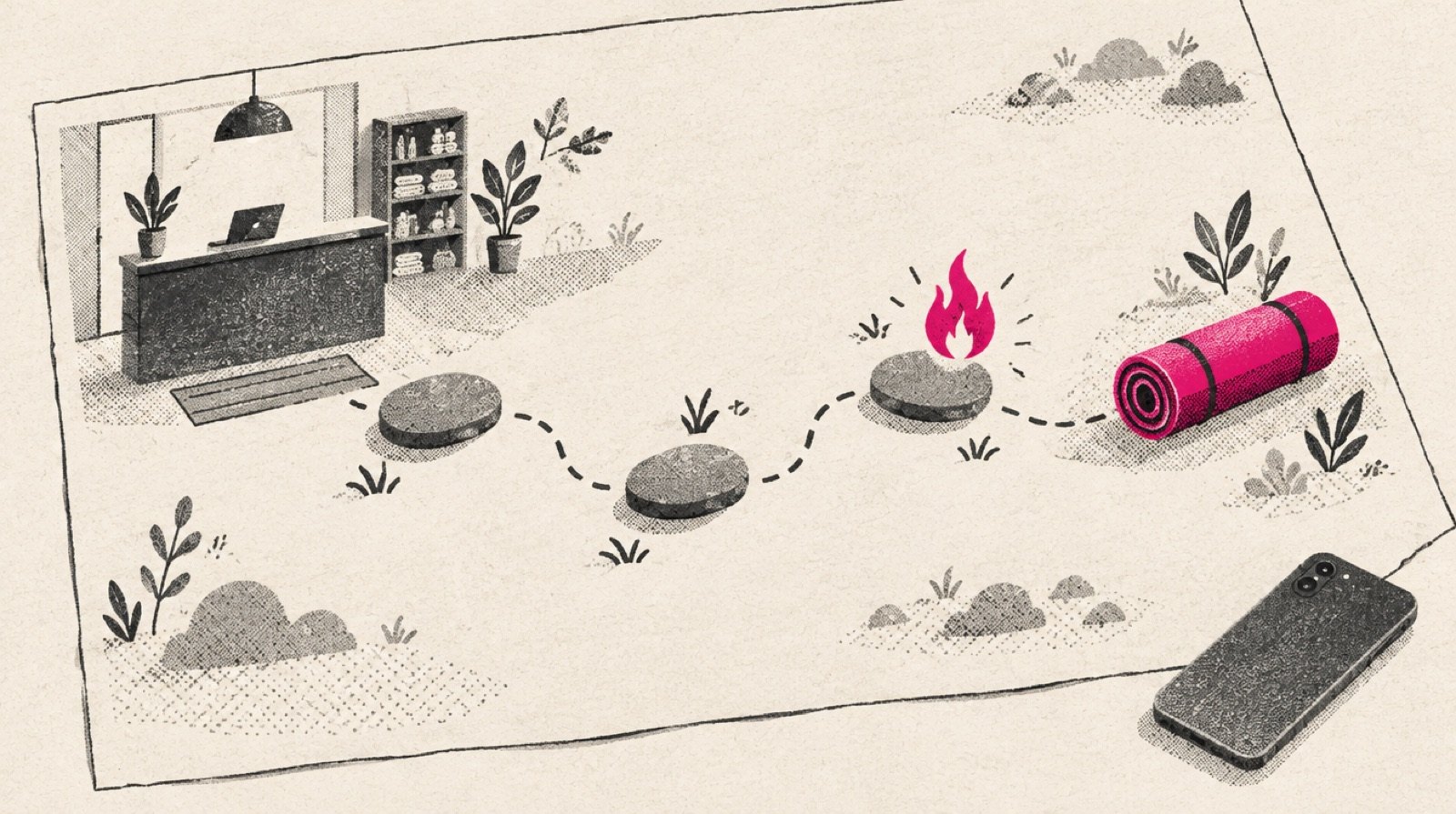
The first time you open a good puzzle game, you do not see the full game. You see one easy level, then a slightly harder one, then a reward. Nobody asks you to buy anything in the first few minutes. The game is teaching you how it works and giving you a reason to come back tomorrow. Designers call that stretch the tutorial, and they plan it move by move.
A new member's first month is the same stretch for a gym, studio, spa or salon. They have paid. They do not yet have a habit. Whether they build one is mostly decided in the first few weeks, and most businesses leave those weeks to chance: a welcome email, a key tag, and good luck.
In the last post we worked on getting people to their first visit. This post is about the visits right after it.
Why the first weeks decide so much
The app world has measured this more closely than anyone. These are app and software numbers, so read them as an analog, but the pattern is consistent.
Duolingo has written about what its streaks do for new learners. In its own data, learners who reach a 7-day streak are 3.6 times more likely to complete their course. That is a correlation from 2022, not proof that the streak causes it, but Duolingo also tested a change: showing new streak milestone animations raised the chance that a brand-new learner was still active a week later by 1.7%.
RevenueCat's data on subscription apps shows the cost of a weak start. Nearly 30% of annual subscriptions are canceled in the first month.
Source: Duolingo Blog, January 2022; RevenueCat, State of Subscription Apps 2025; Health & Fitness Association, 2025 Benchmarking Report
The third number is ours, not an app's. The Health & Fitness Association's 2025 benchmarking report found average member retention of 66.4% in 2024 across the operators it surveyed. About one member in three is gone within the year. We wrote about how that loss starts quietly in members drift before they cancel. The first month is where you can get ahead of it, before there is a habit to lose.
What a designed first month looks like
A game's tutorial has three parts: a few easy wins in a row, someone or something that shows you around, and a first reward that tells you that you are making progress. Each one has a direct version in a membership.
- 1Day 1First visit, met by name, shown around
- 2Days 2 to 14Three classes booked before they leave the first one
- 3Week 2A short check-in with a coach who has seen them train
- 4Day 21A first milestone, noticed and named
- 5Day 30A conversation about what is next, not a sales pitch
Three early visits
The most useful thing a new member can leave their first visit with is the next two visits already booked. A habit is easier to keep when the next three appointments are on the calendar. Picking them together at the desk takes two minutes and saves a lot of "I meant to come back."
A coach intro
In a game, the guide character exists so that the player is never confused and never alone. In a studio, that is one coach who knows the new member's name, has seen them in a class, and asks how it went. Ten minutes in the second week is enough. The member stops being a new face and becomes someone the place knows.
A first milestone
Duolingo's streak works because it makes progress visible early. Pick a milestone a new member can reach in the first three or four weeks: the fifth class, the first full week with three visits, the first time they finish a workout they could not finish on day one. Then notice it, in person if you can. A note from the desk or a shout from the coach costs nothing.
What most businesses do
A welcome email, a key tag, and an open schedule. The next contact is the first renewal or a "we miss you" message after they have already gone quiet.
What the best apps do
A planned first stretch: easy early wins, a guide, a visible first milestone, and a check-in before the habit has a chance to slip.
Here is a hypothetical to put a size on it. Say a studio signs up 40 new members a month. The plan above means booking three classes with each of them at the first visit, 40 short coach check-ins in week two, and 40 milestone moments in week three. Spread over a month, that is a few hours of staff time. The way to know whether it pays is to compare: of members who got the full first month, how many were still coming at day 60, against members who joined before you started.
The most useful thing a new member can leave their first visit with is the next two visits already booked.

What we will not borrow
Games can be ruthless with new players once the tutorial ends. Difficulty spikes, "out of moves" screens and offers timed to frustration are all part of the toolkit. We are borrowing only the patience and the planning.
So the first month should not be a sales funnel in disguise. The day-30 conversation is about what the member wants next: more classes, a different time, a pause if life gets busy. It is not the moment for a contract upgrade. The rule for this series holds here too: loyalty earns more, never pays more. A new member should never find out later that the people who joined after them got a better deal.
A word on messages. If any part of the first month runs on texts or emails, use only the channels the member agreed to, and make it easy to say no. Many members also want to be told before money moves: Zenoti's 2026 survey found 58% want a renewal alert before being charged. Building that reminder into the first month sets the tone for the rest.
On our side: iJoin join pages already check first-time eligibility when someone signs up. Tracking each member's stage through the first month, so the right step shows up at the right time, is something we are building, not something that runs today.
Next in the series, we look at what happens after the first month for the members who stay: streaks, milestones and rewards for regulars, done in a way that never charges loyal members more.
Sources
- Duolingo Blog (Osman Mansur), "The habit-building research behind your Duolingo streak", January 31, 2022. Duolingo internal data. blog.duolingo.com
- RevenueCat, "The State of Subscription Apps 2025" launch post, March 14, 2025. revenuecat.com
- Health & Fitness Association, "HFA Releases 2025 Fitness Industry Benchmarking Report", 175 companies, September 30, 2025. healthandfitness.org
- Zenoti, "The 2026 Fitness Consumer Survey Results", 1,393 current and lapsed US gym members, May 2026. zenoti.com
- Naavik (Harshal Karvande), "Can Royal Kingdom Match Royal Match?", November 20, 2024. Analyst view of "out of moves" screens. naavik.co