Blog Benchmarks · The Membership Report · Part 5
Failed cards and annual plans: the members who never decided to leave
Some cancellations are not decisions at all. They are a card that expired and a text nobody sent. Here is how to catch them, and what plan length has to do with it.
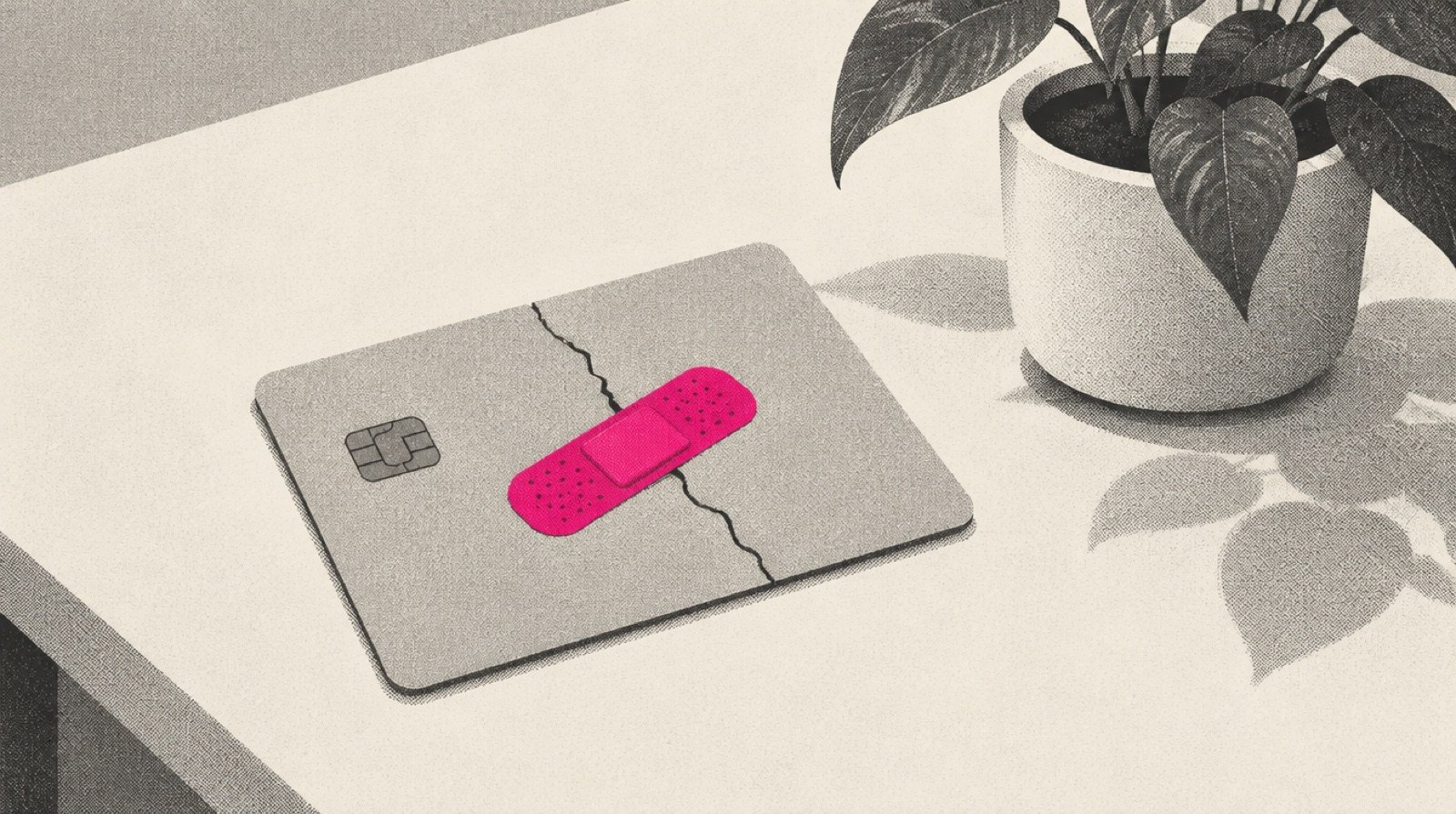
Most of what we write about churn assumes the member made a choice. They got busy, they moved, the price stopped feeling worth it, and one day they asked to leave. A share of every cancellation list is something else. The card on file expired, or hit its limit, or was replaced after a fraud alert. The charge failed. Nobody followed up, and a member who never meant to go is gone.
This is the quietest kind of churn, and the easiest to fix. It is also the part of the Membership Report where the best data comes from outside our industry, so we will be careful to say where each number comes from.
How much churn is a failed card
We could not find a clean published figure for gyms, studios or spas. What exists comes from subscription businesses in general. Stripe reports that 25% of lapsed subscriptions are due to payment failures. A PYMNTS and FlexPay survey of 200 subscription executives, including some in health and fitness, put their own estimate at 50% of churn. One is measured from payment data and one is executives' estimates, so we quote them together as a range.
Source: Stripe, Smart Retries (2024); PYMNTS and FlexPay executive survey (2023); Recurly, 2026 State of Subscriptions. Subscription businesses broadly, not gyms or spas.
Recurly, which runs billing for subscription businesses, puts the starting point in plain terms: about 9 in 100 renewal attempts decline and go into dunning, the sequence of retries and reminders that follows a failed charge.
Here is what that rate would mean for a single location. Say a studio has 400 members on monthly billing. If its decline rate looked like Recurly's, about 36 charges would fail each month. That is arithmetic on a subscription benchmark, not a number from any real studio, but it is a useful way to size the problem. Even if most of those cards recover on a retry, the ones that do not are members you lose without a conversation.
A failed card is a cancellation nobody asked for.
Fixing a card is a text, not a campaign
The fix for most failed payments is small. The member needs to know the charge failed, and they need a way to update the card that takes a moment. What often goes wrong is that the notice is an email from a billing system that lands in a promotions tab, or the update path is "come by the front desk."
- Remind before the charge
In Zenoti's 2026 survey of gym members, 58% said they want a renewal alert before they are charged. A short note before a renewal or an annual charge catches expiring cards early and builds trust.
- Text on the first decline
A friendly text from the location, with a secure link to update the card. No login hunt, no phone call needed.
- Let the billing system retry
Most platforms retry a failed charge on their own. Check that yours is switched on and that a retry does not trigger a late fee by mistake.
- Have a person follow up
If the card is still not updated, a short personal message from someone the member knows. This is where a member who is drifting tells you so.
- Keep the account warm
Do not cancel the membership the moment a charge fails. Give the member a clear window to fix it before anything changes.
That fourth step matters more than it looks. A failed card and a drifting member look the same in a report: no payment, no visits. Sometimes they are the same person. We wrote about spotting drift in check-ins in Members drift before they cancel, and a failed payment is one of the clearest moments to reach out, because you have a reason to write that is not a sales pitch.

What plan length has to do with it
The second half of this chapter is about plan length, because annual and paid-in-full plans change how often a card is charged, and how often it can fail.
The strongest data here is from apps, so read it as an analog rather than a benchmark for clubs. RevenueCat's 2026 report, covering more than 115,000 subscription apps, found that yearly plans renew at 83.4%, against 39.2% for monthly plans. The trade-off sits on the other side: only 5% of lapsed annual subscribers come back, against 20% of monthly.
Source: RevenueCat, State of Subscription Apps 2026, 115,000+ apps. An app analog, not gym or spa data.
Apps are not clubs. Nobody shows up to an app on a cold Tuesday morning. But the shape is worth thinking about. A year-long commitment means fewer renewal moments, and fewer charges that can fail. When an annual subscriber does leave, though, the app data says they rarely come back, which makes the renewal reminder and the exit experience more important, not less.
Monthly plan
Twelve charges a year, twelve chances for a card to fail. Easier to start, easier to stop. Lapsed members come back more often, in the app data.
Annual or paid-in-full plan
One charge a year, so far fewer failed cards. A bigger decision at the start and at renewal. Renews far more often, in the app data, but lapsed members rarely return.
What the businesses we audited sell today
In October 2026 we read the public pages of 1,104 local membership businesses that sell online. Here is what they say about plan length.
22% show an annual, 12-month or paid-in-full option. That is a minority, and it suggests most of these businesses are selling month to month, at least on their websites. A separate question is the minimum term, the shortest commitment a member agrees to. 254 sites, or 23%, state one. The most common terms were 3 months, 12 months and 6 months.
Source: Sneeze It membership website audit, 1,104 sites, October 2026. Most common terms among the 254 sites that state a minimum.
The pattern changes by business. Twelve months was the most common minimum at gyms, three months at boutique and recovery studios, and six months at med spas, where 35% state a minimum term at all. On the other side, 12% of sites tell visitors there is "no contract."
A minimum term and an annual plan are not the same thing. A twelve-month minimum billed monthly still means twelve card charges and twelve chances for one to fail. A paid-in-full year means one. If you sell the first, the card-update steps above matter all year. If you are thinking about the second, it is worth testing on a slice of new members rather than switching everyone at once, and it is worth telling members clearly before the renewal charge comes.
Whatever you sell, write the terms down where a member can read them before they pay. The full report covers the rest of the member's path, and /save-members shows what a clear exit can look like.
Sources
- Stripe, How we built it: Smart Retries, January 23, 2024. stripe.com
- PYMNTS and FlexPay, survey of 200 subscription executives, May 2023. pymnts.com
- Recurly, 2026 State of Subscriptions. recurly.com
- RevenueCat, State of Subscription Apps 2026. revenuecat.com
- Zenoti, 2026 Fitness Consumer Survey, May 2026. zenoti.com
- Sneeze It, membership website audit, 1,104 sites, October 2026. The Membership Report