Blog Benchmarks · The Membership Report · Part 4
The online cancel rules, state by state
The federal click-to-cancel rule was struck down, but the states kept moving. Here is a plain-English summary of where an online sign-up now means an online exit, and the questions to take to your attorney.

Owners want to know a simple thing: do I have to let members cancel online? The honest answer is that it depends on where your members live, how they joined, and which rules apply to your kind of business. It also changed a lot in the last two years, and most of the change happened in state capitals rather than in Washington.
So we read the rules. This is the plain-English version, for the owner who wants to know what to ask.
What happened to the federal rule
In October 2024 the Federal Trade Commission finalized what most people called the click-to-cancel rule. When it announced the rule, the FTC said it was receiving nearly 70 complaints a day about recurring subscriptions, up from 42 a day in 2021.
Source: Federal Trade Commission, final click-to-cancel rule announcement, October 16, 2024
That rule never took full effect. A federal appeals court vacated it on July 8, 2025. In February 2026 the FTC restored its older negative-option rule, and in March 2026 it asked for public comment on a new one. As of this writing there is no new federal rule.
That does not mean the FTC stopped paying attention to memberships. In August 2025 it sued a national gym chain with more than 600 locations. The FTC alleges that members could cancel only in person or by mail, and that in-person cancellation was limited to one employee. Those are allegations, and the case is ongoing. We mention it for one reason: it shows which cancel experiences a regulator is willing to look at closely.
The states that now require an online exit
While the federal rule went back and forth, the states kept going. Where a member signed up online, these states, and New York City, now require that the member can cancel online. The details differ, and some of them matter a great deal for a club or studio.
| State | In force | Worth knowing |
|---|---|---|
| California | Jul 1, 2025 | Contracts from that date |
| Colorado | Aug 6, 2025 | Online link or in person at the club |
| Connecticut | Oct 1, 2023 | Amended Jul 1, 2026 |
| Delaware | 2021 | |
| Idaho | Jan 1, 2023 | Internet sign-ups only |
| Illinois | Jan 1, 2022 | |
| Maine | Jan 1, 2026 | Names health memberships |
| Maryland | Jun 1, 2026 | Online and a toll-free number |
| Massachusetts | Sep 2, 2025 | Same medium, as easy as joining |
| Minnesota | Jan 1, 2025 | Also accept phone and email |
| New Jersey | Apr 1, 2024 | Health clubs |
| New York State | Amended 2025 | Online or phone |
| New York City | Oct 1, 2026 | Covers in-person joins too |
| Vermont | Jul 1, 2019 | Contracts of a year or longer |
| Virginia | Jul 1, 2026 | Online or phone |
The citations for each are listed in the sources at the end of this post. Two other notes. Oregon and Utah do not require online cancel under the rules we read. And New York City is the outlier worth circling: from October 1, 2026, its rule calls for an online way to cancel even when the member joined in person.
The pattern across the states is simple: the way out should look a lot like the way in.
Read the last column again. Massachusetts asks that canceling be as easy as signing up, in the same medium. Minnesota adds phone and email; Maryland adds a toll-free number. The details differ, but the direction is the same.
What our audit saw, and what it cannot tell you
In October 2026 we read the public pages of 1,104 local membership businesses that sell online: gyms, boutique studios, recovery and wellness businesses, and med spas. We wrote up the full findings in The join is online. The exit isn't., and the whole report is at /membership-report.
The short version: 51 of the 1,104 sites, about 5%, say a member can cancel online, in an app or from their account. Of the 263 sites that state any cancellation term at all, 212, or 81%, state no online way to cancel on the pages we read.
What the audit does show is a gap between how these businesses sell and how they describe the exit. The join is often a button; the cancel, when described, is often a letter, a visit or a staff-processed form. That gap is what the state rules above are about, which makes it worth a conversation now.
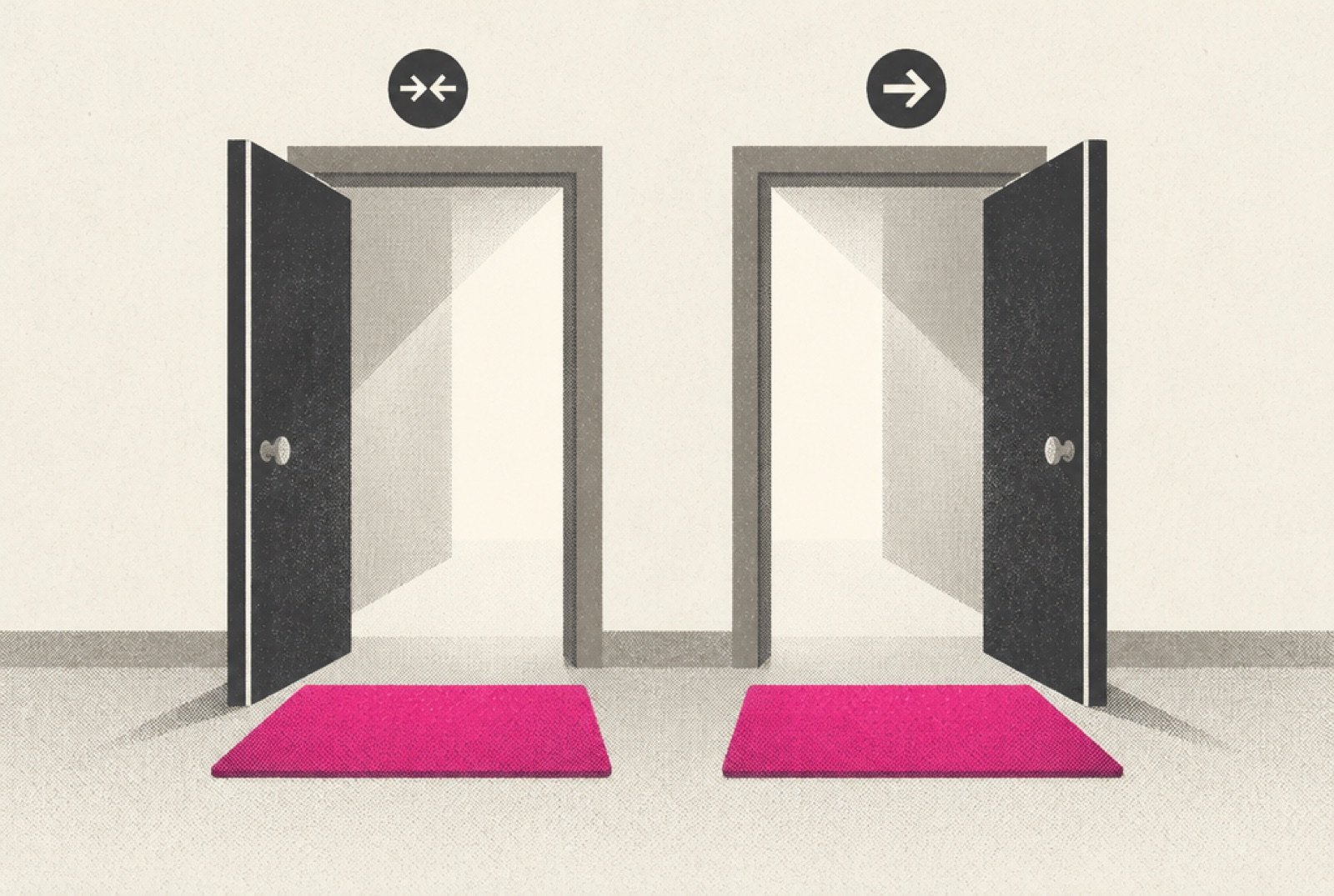
An exit built for the front desk
Cancel by letter, in person, or through a form a staff member processes later. The member learns the steps only when they ask. Notice and fees explained at the desk.
An exit that matches the join
Cancel from the same account, app or page the member joined through. The steps are written down before the member pays. Notice and fees stated in plain words next to the join button.
What to check with your attorney
You do not need to master fifteen sets of rules. You need one meeting with the right facts and questions. Here is what we would bring.
- Where your members live and where they joined
Bring a count by state, and flag any New York City locations. The rules follow the member and the contract, not only your headquarters.
- How each member signed up
Online, in an app, or in person. Several of these rules turn on how the member joined, and New York City's covers in-person joins too.
- Which channels you must accept
Some states name more than online: phone, email or a toll-free number. Ask which apply to you.
- Whether a separate health club statute applies
Many states have their own health club laws on top of the rules above. We did not review them. Your attorney should.
- What you can say before the member confirms
If you want to ask why they are leaving, or offer a pause first, ask how to do that without making the exit harder.
- What the member gets at the end
A confirmation they can keep, and a clear date when billing stops.
Then look at your own flow the way a member would. This is the shape most of these rules point toward.
- 1JoinOnline, in an app, or at the desk
- 2AccountThe member can find the cancel option where they manage their plan
- 3AskOne optional question about why, and one option such as a pause
- 4ConfirmCanceled in a step or two, with a receipt and an end date
We built a working example at /save-members. Treat it as a design reference, and have your attorney review whatever your members will see.
Sources
- Federal Trade Commission, final click-to-cancel rule announcement, October 16, 2024. ftc.gov
- Federal Trade Commission, Negative Option Rule page, status as of October 2026. ftc.gov
- Federal Trade Commission, press release on a complaint against a national gym chain, August 20, 2025. ftc.gov
- State rules read at official sources, October 2026: California Bus. & Prof. Code 17602; Colorado C.R.S. 6-1-732; Connecticut Conn. Gen. Stat. 42-158ff; Delaware 6 Del. C. 2732; Idaho Code 48-603G; Illinois 815 ILCS 601/10; Maine 10 M.R.S. 1210-C; Maryland Com. Law 14-1328; Massachusetts 940 CMR 38.05; Minnesota Stat. 325G.56 to .62 and 325G.24; New Jersey N.J.S.A. 56:8-42 (P.L. 2023, c. 241); New York GBL 527-a and GBL 624; New York City 6 RCNY 5-110; Vermont 9 V.S.A. 2454a; Virginia Code 59.1-207.46.
- Sneeze It, membership website audit, 1,104 sites, October 2026. The Membership Report