Blog Benchmarks · The Membership Report · Part 3
Members drift for weeks before they cancel. Here is how to see it.
More Americans belong to a gym or studio than ever, and about one member in three is gone within the year. Many of them stop coming long before they stop paying.
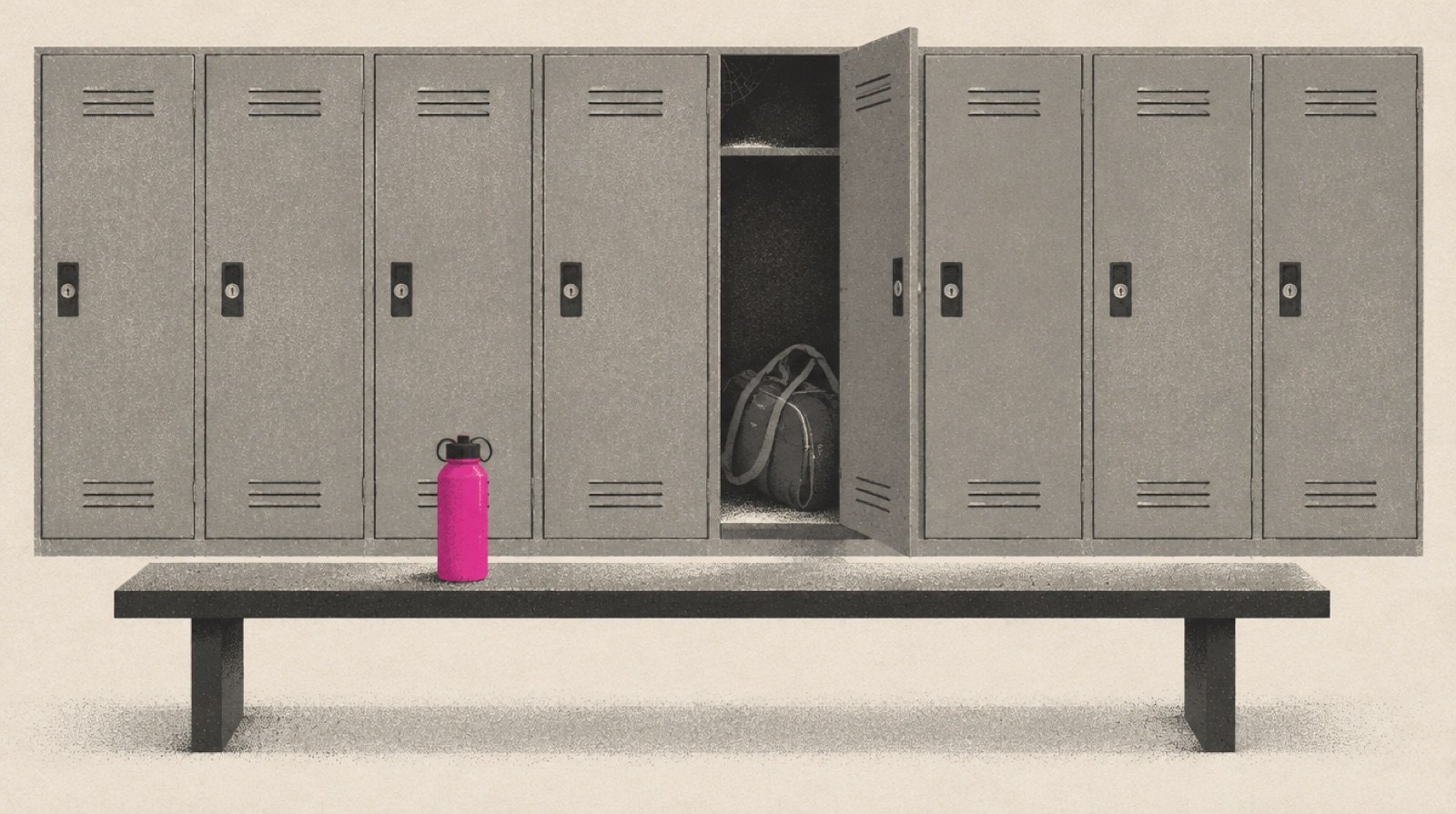
A cancellation is the last thing that happens. By the time a member asks to leave, the decision has often been forming for weeks, in the gaps between visits. This part of The Membership Report is about those gaps: how big the problem is, what members say about it, and how to spot it in data you already have.
More members, and more leaving
The industry is not shrinking. The Health & Fitness Association's 2026 consumer report counts a record 81 million Americans who belonged to a gym, studio or fitness facility in 2025, up 5.2%. Demand is there.
Keeping it is harder. In the association's 2025 benchmarking report, which surveyed 175 operators, member retention was 66.4% in 2024. Put plainly, about one member in three was gone within the year.
Source: Health & Fitness Association, 2026 Consumer Report and 2025 Benchmarking Report; Zenoti, 2026 Fitness Consumer Survey
The first half of 2026 shows the split inside that picture. ABC Fitness compared platform data from January 1 to May 31, 2026, with the same months a year earlier:
| January to May 2026, year over year | New joins | Check-ins | Cancellations |
|---|---|---|---|
| Gyms | down 9% | up 1% | up 8% |
| Studios | down 5% | up 27% | down 6% |
Both formats are signing up fewer new members. But at studios, the members they have are showing up far more often, and cancellations fell. At gyms, check-ins barely moved and cancellations rose. Where visits jumped, cancellations fell; where visits stalled, cancellations rose. Two formats are not proof of anything, but the pattern is worth checking in your own numbers.
Memberships are spreading beyond fitness too. Zenoti's 2026 benchmark found med spa membership sales up 13% in 2025 even as new guest visits fell 11%, and salons with memberships grew visits from existing guests by 12%, against 3% for salons without them. More businesses now have a membership base to look after, and the same drift applies to every one of them.
The quiet middle
Zenoti's 2026 survey of 1,393 current and former US gym members is the clearest look we have found at what happens between the last visit and the cancellation.
Source: Zenoti, 2026 Fitness Consumer Survey, 1,393 current and former US gym members, May 2026
More than half had stopped going at some point without formally canceling. Among members aged 45 to 60, it was 63%. Nearly half of lapsed members say their gym never reached out. And 46% say they would feel more loyal if the gym simply noticed they had been away.
That last number is the opportunity. Noticing costs almost nothing. It does not need a discount or a campaign, only a system that sees a regular going quiet and a person who sends a note.
The 14% is the warning. When gyms do reach out, few lapsed members find it very relevant. A generic "we miss you" with a promo code is not noticing. A note that mentions their usual class, their usual time, or the reason they gave at signup is.
Noticing costs almost nothing. It needs a system that sees a regular going quiet, and a person who sends a note.
- 1RegularTwo or three visits a week, same times
- 2SlippingVisits halve, the usual class is missed
- 3QuietNo visits for two or three weeks
- 4Paying, not comingBilling runs, the gym is a cost
- 5CancelPrice becomes the reason given
Why they say they left
When YouGov asked former gym-goers why they stopped, 41% said it was too expensive, 25% cited a change in personal circumstances and 23% said they had no time.
"Too expensive" is worth reading carefully. A membership feels more expensive the less it is used. A member who has not been in for a month is paying full price for nothing, and price is the easiest reason to give. Our read is that some of what gets recorded as a price objection is really a drift that nobody caught.
That cost is visible to consumers outside fitness too. In CNET's 2025 survey with YouGov, US adults said they spend an average of $17 a month, $204 a year, on subscriptions they don't use. That figure covers all subscriptions, not gyms, but it explains the mood: people are auditing their bank statements, and an unused membership is an easy line to cross out.
Change in circumstances and lack of time are where a pause fits. A new job or a new baby is a reason for a break, not necessarily a goodbye. In Part 1 we covered how to offer one.
What billing says
Active member. Paid on the first. No issues.
What check-ins say
Was in three times a week through August. Twice in September. Not since the 12th. Usual class is Tuesday at 6.
How to spot drift in your own data
Most booking and billing platforms record check-ins. The data is there; the habit of reading it often is not. You do not need a model or a dashboard to start. You need a weekly list.
- Set each member's own baseline
Use their average weekly visits over the last two or three months, not a club-wide average. Someone who comes once a week and still comes once a week is fine.
- Flag a drop, not a level
Each week, list members whose visits fell by half or more against their own baseline, and anyone with no visit in 14 days who used to come weekly.
- Reach out by name, with something specific
Mention the class or time they used to keep. Ask if something changed. Offer a pause if life got in the way.
- Record the answer
Note the reason, and what you offered. Over a few months, the reasons tell you more than any survey.
- Watch the renewal date
Before a member is charged for a renewal, especially after a quiet stretch, send a reminder. Zenoti found 58% want one.
Here is how that works on a hypothetical. Say a studio has 400 members. If the weekly list flags 12 of them, and one staff member spends five minutes on each note, that is an hour a week. Whether that hour pays off depends on your members, so track it: of the members you reached, how many came back within a month, against those you flagged but did not reach.
Your website matters here too. In Part 2 we found that three in four of the 1,104 membership sites we read say nothing about how to cancel. A drifting member who cannot find the exit may stay quiet longer, and leave annoyed when they finally do.
The full chapter, including the research behind each number here, is in The Membership Report.
Sources
- Health & Fitness Association, 2026 US Health & Fitness Consumer Report, April 9, 2026. healthandfitness.org
- Health & Fitness Association, 2025 Fitness Industry Benchmarking Report, 175 operators, September 30, 2025. healthandfitness.org
- ABC Fitness, Mid-Year 2026 Wellness Watch, June 25, 2026. Platform data January 1 to May 31, 2026, year over year. abcfitness.com
- Zenoti, 2026 Fitness Consumer Survey, 1,393 current and former US gym members, May 2026. zenoti.com and full survey
- Zenoti, 2026 Beauty & Wellness Benchmark Report, Medspa and Salon Editions, April 29, 2026. zenoti.com
- YouGov, "Why do consumers turn their backs on gym memberships", June 19, 2024. yougov.com
- CNET with YouGov, Subscription survey 2025, 2,440 US adults, June 18, 2025. cnet.com
- Sneeze It membership website audit, 1,104 sites, October 2026. The Membership Report